

Interviews · Est. 1972
The interviewsuit
Judgement forms in about seven seconds. You cannot talk your way out of the first impression, so it may as well work for you.
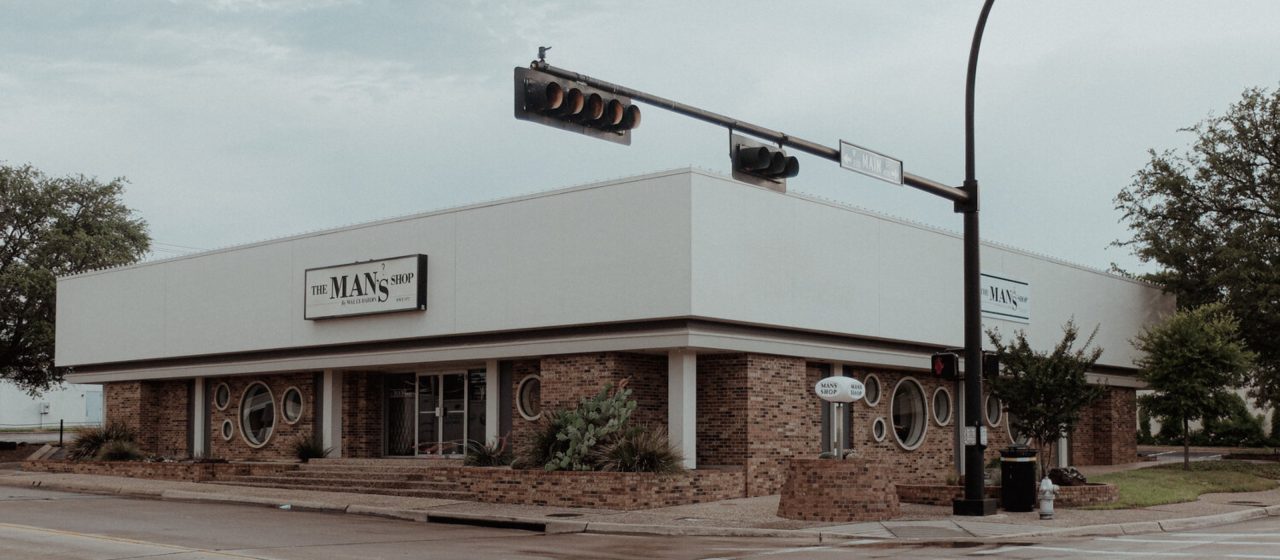
Navy or charcoal, properly fitted, is the correct interview suit in DFW. Both read as competent without appearing aggressive; black reads too formal for most corporate settings here. Fit matters more than price — shoulders that sit right and half an inch of shirt cuff signal attention to detail. The Man’s Shop fits interview suits in Arlington.
Why it carries weight
When the shortlist is evenly matched
In a competitive Dallas-Fort Worth-Arlington market several candidates will have comparable experience. What separates them at the margin is often how seriously they appear to have taken the occasion.
That competition is intensifying in finance particularly. The Texas Stock Exchange opened for trading in Dallas in July 2026, and the region — increasingly called Y’all Street — has drawn major operations from JPMorgan, Goldman Sachs and Charles Schwab. More candidates, and a more conservative standard than the one Texas had a decade ago.
A well-chosen suit signals three things without you saying a word: that you understand professional norms, that you researched the setting, and that you pay attention to detail. Interviewers rarely articulate this, but it registers.
The reverse is also true and less forgiving. A jacket that pulls across the back or sleeves that swallow your hands suggests carelessness, fairly or not.
Color
What each one says
- Navy
- The safest answer in almost every DFW industry. Reads as confident and reliable without aggression, and photographs well if the interview involves a panel or a camera.
- Charcoal
- Slightly more formal than navy and equally safe. Sophisticated, versatile, and appropriate from finance to healthcare administration.
- Medium gray
- Works well in creative fields and lighter offices while staying professional. Less severe than charcoal in a bright room.
- Black
- Avoid for daytime corporate interviews. It reads as evening wear or funereal in most settings here. Save it for events that specifically call for it.
- The shirt
- White or pale blue. Anything more interesting competes with your face, which is where you want attention.
- The tie
- Silk, conservative, in a color that complements rather than contrasts hard. If you notice the tie first, it is the wrong tie.
Fit
The details that get noticed
- Shoulders
- The seam sits at the edge of your shoulder. This is the one thing a tailor cannot fix afterwards, so check it first and treat it as pass or fail.
- Sleeve length
- About half an inch of shirt cuff showing. It is a small thing that reads as deliberate, and its absence reads as borrowed.
- The button
- The jacket should close without pulling or gaping at the button. If it strains, size up and have the waist taken in.
- Trouser break
- A clean break at the shoe — a slight fold, not a pool of fabric. Bring the shoes you will wear to the fitting.
- Collar gap
- The jacket collar should sit flat against your shirt collar. A gap there is the most visible sign of a jacket that does not fit.
Dressing for the level above
If it is a promotion, not an entry
Dress for the room you want to be in
Look at what the people one level above you wear, and match that rather than your current peers.
Go simpler, not louder
At senior level the signal is restraint. Better cloth, cleaner lines, fewer accessories.
Allow two weeks
Alterations take one to two weeks in normal times. Do not discover the fit problem the night before.
Common questions
Interview suits, answered
What color suit is best for an interview in Dallas?
Navy, if you own only one. It suits every complexion, works in every industry here, and you will wear it again for client meetings and evenings out. Charcoal is the equally safe alternative when you already own navy, and either will serve you for years rather than one morning.
Should I wear a black suit to a job interview?
Generally no. Black reads as too formal or slightly funereal in most corporate settings, particularly in daylight. Navy or charcoal are safer and more versatile afterwards, since you will wear them again for client meetings and events.
What is the most common fit mistake on an interview suit?
Buying a size too large. Men size up because a bigger jacket feels safer, but excess fabric reads as borrowed rather than comfortable, and it is the single thing interviewers register without knowing why. A slightly snug jacket that a tailor lets out looks far better than a loose one taken in.
How far ahead should I buy a suit for an interview?
Allow at least two weeks for alterations on an off-the-rack suit, and four to six weeks for custom. If your interview is sooner than that, come in anyway — we will tell you honestly what is achievable in the time available.
Should I wear the same suit I wear to work for a promotion interview?
Preferably not, if your colleagues have seen it weekly for two years. Familiarity works against you in a room where you are asking to be seen differently. A different suit, or at minimum a different shirt and tie, helps the conversation start somewhere new.
Do I need a tie?
For most formal interviews in finance, law, and traditional corporate settings, yes. In tech and creative industries a tie can read as overdressed. If you are unsure, wear one and remove it in the car if the room turns out to be looser than expected.
Two weeks for alterations
Book with Patrick or Austin
Bring the shoes you’ll wear. Break is judged standing, on you.
Book with PatrickBook with Austin
100 S. West Street, Arlington, Texas 76010
Mon–Sat 10am–5pm · Closed Sunday
(817) 265-1116