

Wardrobe · Est. 1972
A full closetand nothing to wear
The most common problem we see, and it is almost never solved by buying more.
Most full closets fail because the pieces do not work together, not because there are too few. Remove what no longer fits or has dated, keep a narrow palette, and add the two or three garments that make the rest usable. A working wardrobe is usually around thirty pieces. The Man’s Shop does wardrobe consultations in Arlington.
Why it happens
Buying one piece at a time
A closet fills up through years of individual decisions, each sensible on its own. Nothing was bought to go with anything else, so nothing quite does.
Silhouettes also moved. The very slim cuts of the 2010s have given way to cleaner, straighter lines, which is why a jacket bought in 2019 can feel wrong without being worn out. It is proportion, not condition.
The fix is rarely more clothing. It is usually removing a third of what is there and adding two or three pieces that connect what remains.
What to remove
Be honest about these
- Anything that does not fit
- If it needs you to lose ten pounds, it is not a wardrobe item. Alter it or move it on.
- Very slim cuts
- Skinny trousers and tight shirts read as dated now rather than sharp. This is the largest category in most closets we see.
- Worn-out basics
- Shirts gone thin at the collar, knitwear that has pilled, shoes past resoling. These quietly undermine everything worn with them.
- Single-outfit pieces
- The garment that goes with one other thing. If it does not combine with at least three, it is taking up space.
- Anything with a logo
- In the wardrobe we are describing, visible branding dates faster than anything else.
What to add
The pieces that connect everything
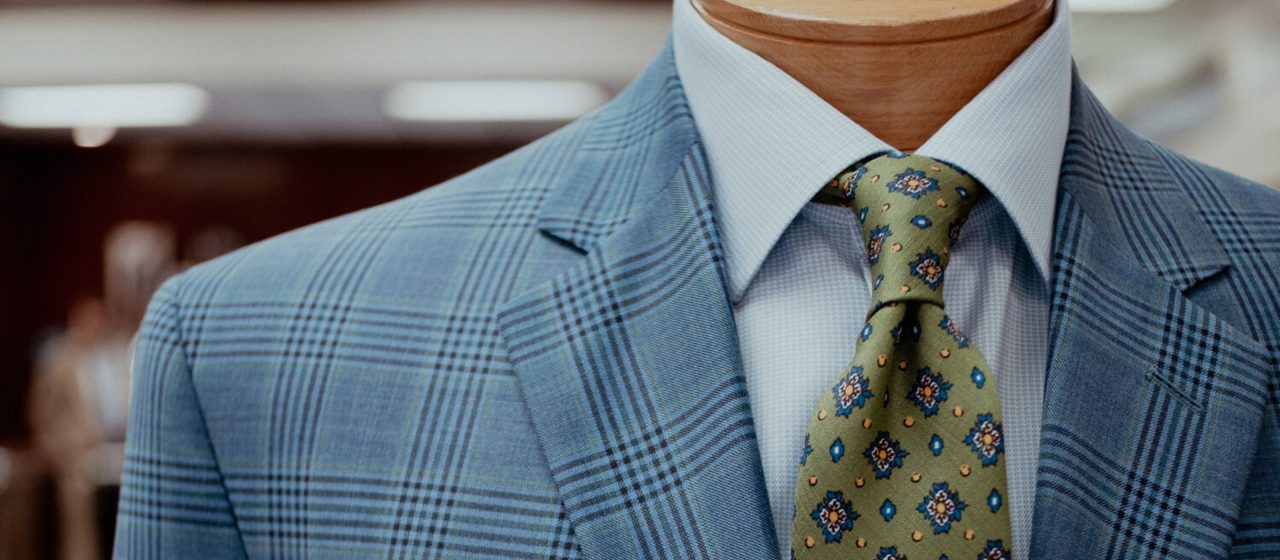
- A soft-shouldered sport coat
- Navy or a texture. Makes everything already in the closet look more considered.
- Two pairs of trousers in the base palette
- Gray and stone. These are what turn separate items into outfits.
- Three shirts with a current collar
- Spread or semi-spread. The cheapest correction available and the most visible.
- One fine-gauge knit
- Merino, in navy or charcoal. Layers under the jacket and stands alone.
- Leather shoes in brown and black
- Resoleable, kept polished. The end of the outfit that most men neglect.
How to do it
In one afternoon
Take everything out
Everything. A closet you can see into is a closet you make honest decisions about.
Sort into three piles
Wear regularly, would wear if altered, no longer wear. The middle pile is the valuable one — most men have several hundred dollars of clothing that needs an hour of tailoring.
Fix the middle pile
Bring it in. Hemming, taking in a waist, shortening sleeves — these are quick and they return garments to circulation.
Then, and only then, buy
With a clear closet you can see the two or three actual gaps rather than guessing.
Common questions
Wardrobe reset, answered
How many clothes should a man actually own?
A working wardrobe is usually around thirty pieces, excluding underwear and workout clothing. The number matters far less than the coherence — thirty garments that combine freely produce more outfits than sixty that do not.
Why does my full closet feel like nothing to wear?
Almost always because the pieces were bought individually rather than to work together. Nothing shares a palette, so most combinations do not work and you default to the same three outfits. The solution is usually removal plus two or three connecting pieces, not more shopping.
What should I throw out first?
Anything that does not fit you now, and anything in a very slim cut. Between them those two categories account for most of the dead space in the closets we see. Be particularly honest about clothing kept for a future body.
What can a tailor actually change?
Waist, sleeve length, trouser hem and taper, and jacket length within limits. What cannot meaningfully change is the shoulder — if that does not fit, the garment is not worth altering. That single rule decides most of what to keep.
How many colors should a wardrobe use?
Four or five for the base — typically navy, gray, stone, and one warmer tone — with everything else built around them. A narrow palette is what makes garments interchangeable, which is the whole point.
What does a wardrobe consultation involve?
A conversation about what you actually wear and what your week actually requires, then a plan. Sometimes that means alterations to what you own, sometimes two or three additions. It does not mean replacing your wardrobe.
Bring the middle pile
Book with Patrick or Austin
The clothes that would work if they fit. Usually an hour of tailoring.
Book with PatrickBook with Austin
100 S. West Street, Arlington, Texas 76010
Mon–Sat 10am–5pm · Closed Sunday
(817) 265-1116