

Heritage · Est. 1972
Old money,without the money
In a region that has always celebrated success loudly, the man who does not need to announce it stands out more.
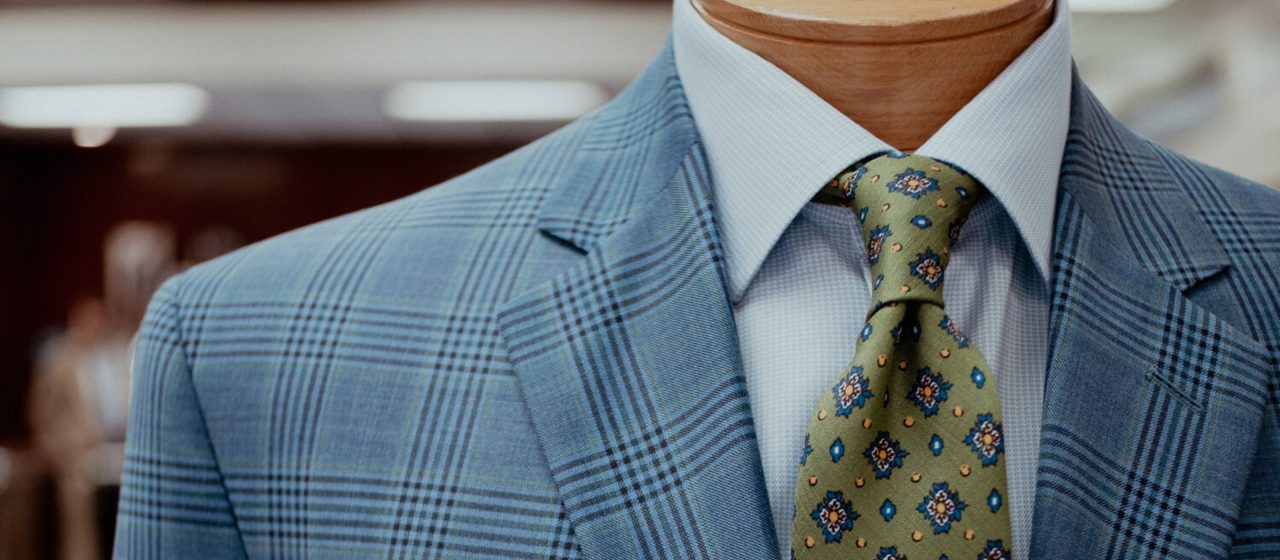
Old money style means fewer, better garments in a restrained palette, cut properly. Navy, charcoal, slate, camel and cream; natural fibres; modest accessories. It is less a class signal than a purchasing philosophy — a good navy blazer serves a decade while a trend piece dates in a season. Fitted at The Man’s Shop in Arlington.
What it actually means
A purchasing philosophy, not a costume
The label is unhelpful. Nobody is pretending to have inherited anything. What the phrase describes is a way of buying: fewer things, better made, kept longer.
That translates into specifics. Well-cut clothing over trend pieces. Modest accessories that serve a purpose. Natural fibres that age rather than degrade. And a willingness to spend more once instead of less repeatedly.
The economics support it, which is the part most men find persuasive. A well-made navy blazer is still working a decade in. The flashier alternative from two seasons ago is already dated. Calculated per wearing, the restrained choice is usually the cheaper one.
The palette
Deliberately narrow
- Navy
- The foundation. It flatters every complexion, it works in every setting, and it combines with everything else in this list.
- Charcoal and slate
- The formal end. Charcoal for business, slate for the days that want something slightly softer.
- Camel
- The color that makes this wardrobe look considered rather than plain. A camel overcoat or knit is the single most useful non-neutral you can own.
- Cream and ecru
- For shirting and summer trousers. Warmer and more flattering than stark white against most complexions.
- What is missing
- Anything loud, anything logo-bearing, and anything that will be identifiable to a specific season in five years.
The staples
What the wardrobe is built from
- Navy blazer
- Soft shoulder, natural construction, horn buttons rather than anything shiny. Worn with gray flannel, with cream trousers, with denim.
- Gray flannel trousers
- The most underrated garment in menswear. They make a blazer look like an outfit rather than a jacket and trousers.
- Oxford cloth shirts
- White and pale blue, button-down collar, worn until they soften. These improve with age in a way few garments do.
- Knitwear in natural fibres
- Lambswool and cashmere in navy, camel and charcoal. Under a jacket or on its own.
- Leather that ages
- Shoes that can be resoled, a belt that matches them, and nothing with visible hardware. Buy once, maintain, keep.
Where to begin
If you are starting from nothing
The navy blazer
Everything else is chosen to work with it. Get this one right and the wardrobe assembles itself.
Gray flannel and cream trousers
Two pairs, and now the blazer gives you two distinctly different outfits.
Shirts and knitwear over time
These are the cheap part. Add them as you need them rather than buying a wardrobe in one afternoon.
Common questions
Old money, answered
What is old money style?
A way of dressing built on fewer, better garments in a restrained palette — navy, charcoal, camel, cream — made in natural fibres and cut to fit properly. The defining feature is the absence of anything that announces itself: no logos, no trend pieces, nothing identifiable to a particular season.
Is old money style expensive to build?
It costs more per garment and less per year. A navy blazer that lasts a decade works out cheaper than three that last two seasons each. The approach only becomes expensive if you try to assemble the whole wardrobe at once rather than over several years.
What is the first piece to buy?
A navy blazer with a soft shoulder and horn buttons. It works with gray flannel, cream trousers, and dark denim, which makes it three outfits rather than one. Everything else in this kind of wardrobe is chosen to work alongside it.
Does this look work in Texas?
It needs adapting for the climate rather than adopting wholesale. Lighter cloth for eight months of the year, and more cream and camel than a Northeastern version would use. The principles carry; the fabric weights do not.
What should be avoided?
Visible logos, obvious hardware on shoes and belts, and anything that will be datable to a specific season later. The test is whether a photograph of the outfit would look out of place in five years.
Can you help build this kind of wardrobe?
It is much of what we do, and it is best done gradually. Come in with what you own and we will work out the order to buy in rather than selling you everything at once.
Start with one jacket
Book with Patrick or Austin
We’ll tell you what to buy first, and what can wait a year.
Book with PatrickBook with Austin
100 S. West Street, Arlington, Texas 76010
Mon–Sat 10am–5pm · Closed Sunday
(817) 265-1116